
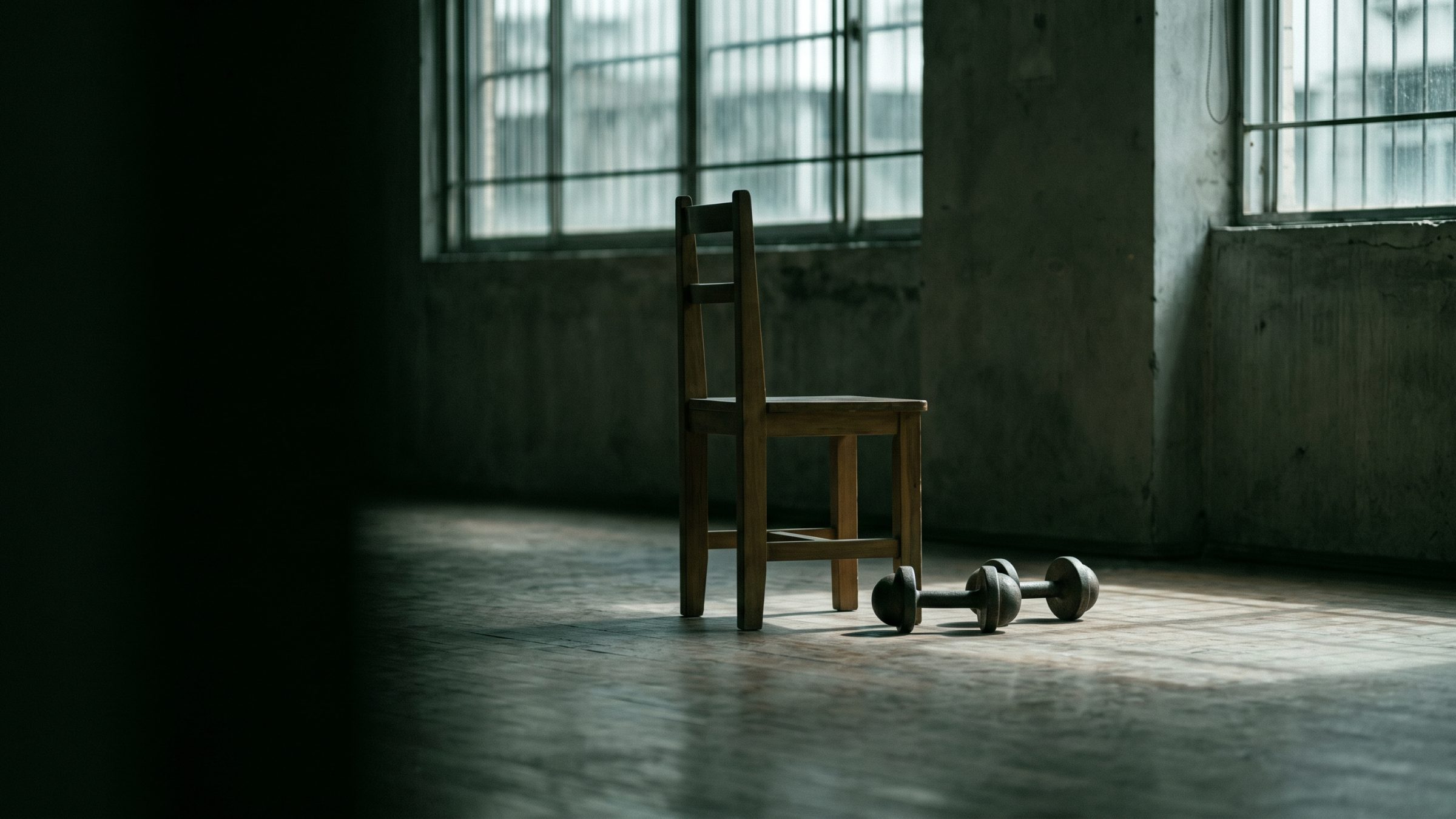
Many programmes for older adults stop at gentle movement. That is a missed opportunity. Strength training for older adults is widely recommended by health organisations, because muscle strength supports everyday independence: getting up from a chair, carrying shopping, climbing stairs. This guide covers how to start from wherever you are and why the plan should keep going up.
Why strength training for older adults matters
Everyday tasks are strength tasks. Lifting a bag into the car, getting down to the floor and back up, or catching yourself when you misstep all rely on muscles that can produce force. Gentle mobility has its place, but on its own it does not ask muscles to do much more than they already do.
Start from where the person actually is
Some people start strong; others start from very little. A good approach begins with what someone can do today, such as standing up from a chair without using their hands, and builds from there.
Simple field tests help here. How many times can you stand up from a chair? Can you rise without pushing on your knees? Can you carry a shopping bag in each hand across a room? The answers give a starting point that is about you, not about your age.
A ladder, not a ceiling
GymAI’s catalogue includes a section for older adults and capacity: a four-rung ladder with its own field tests, for people starting from nothing. The important part is that it goes upward, and it ends in loaded work. Being older is a reason to adjust the starting point, not a reason to stop at bodyweight forever.
- Exercises can be seated, supported or adapted, and they sit in the same catalogue as everything else.
- A category filters what is offered; it never cuts down what a person is allowed to do.
- A resident of a care home who can lift weight goes on lifting weight.
The older adults section holds 468 exercises, and across the whole catalogue 2,529 are seated, supported or adapted. For people who cannot yet load a joint on land, the water section includes aquatic work.
For care homes and day centres
Care homes and day centres can request early access. The aim is to programme residents without paper, while keeping the same principle: the category helps choose what is offered, and it never lowers what a resident is allowed to do. GymAI itself is not open yet.
Practical tips
- Check with a doctor or physiotherapist first, especially with a heart, joint or balance condition.
- Progress in small steps and keep good form.
- Consistency matters more than intensity at the start.
- Use a sturdy chair, a rail or a wall for support while balance improves.
Frequently asked questions
Is it too late to start strength training?
Strength training is widely recommended for older adults, including people who have never lifted before. The key is to start at the right level, with guidance where needed.
Do I need a gym?
Not to begin. Early rungs can use a chair and your own bodyweight. A gym becomes useful as you move towards heavier loaded work.
For yourself, a parent or a care home, join the GymAI waiting list.
General information, not medical advice. Speak to a healthcare professional before starting if you have a medical condition.


No comments yet
Nobody has written anything here. You can be the first.